Contract: EVgwa5CHBVwk6sCTa4QJrVXYBKngZhYqh2a2ZGDApump
Overview
Macroduck is a Solana token launched on Pump.fun in the early hours of 31 August 2026 around an open-source robotics story. It advanced from launch to an all-time high market capitalisation of approximately $7.35 million on more than $20 million of volume within hours, before retracing sharply to a range of roughly $260,000 to $670,000 depending on the snapshot.
Origin
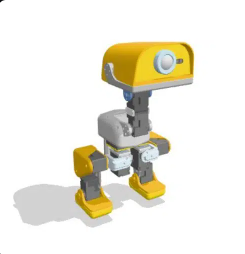
On 27 August 2026, Pollen Robotics, the robotics team at Hugging Face, announced the Microduck: a $399 open-source 25-centimetre bipedal robot duck trained through reinforcement learning. The unit walks with a waddle, sits, kicks, roller-skates, retrieves objects with its beak and recovers after falling. Pre-orders opened immediately and the announcement circulated widely across technology and artificial-intelligence communities.
On 30 August, the robotics engineer Andrea Esposito (@aesposito0) published a post stating that he had reverse-engineered the Microduck and produced a larger version, which he named the Macroduck. He announced that a small number of units would be given away at no cost, with an approximate four-week lead time against the official four-to-six-month wait, and published an interactive three-dimensional CAD viewer allowing the assembly to be disassembled in the browser.
Token launch
The token was launched on Pump.fun at approximately 01:00 UTC on 31 August 2026 by an account operating under the handle megacrabtopaxio. The contract address was distributed by several commentators shortly afterwards. Discussion in the Pump.fun chat characterised the theme as "robotics, the new wave after AI", combining hardware credibility, artificial-intelligence adjacency and a free-hardware giveaway.
Market activity and controversy
The token ran parabolically to approximately $7.35 million before declining rapidly. Two developments were identified by holders as the cause of the reversal.
First, creator fees were claimed. Community estimates of the amount ranged from approximately $20,000 within the first hours to figures between $70,000 and $100,000 as volume increased. Second, a single sale of approximately $30,000 was executed shortly afterwards, which coincided with the breakdown of the chart.
The reaction divided into two positions. One holds that Esposito is a legitimate engineer — a hand lead at Foundation Robotics, previously at Tesla Optimus, Tesla Energy and MIT — who is not crypto-native and did not launch the token himself; the initial speculation that his account had been compromised, and his subsequent decision to host an X Space, are cited in support. The other holds that the viral hardware story functioned as an unstructured fundraise, that fees were extracted and that the subsequent sale destroyed confidence. At least one account began publicly labelling him a scammer.
Two secondary points contributed to the loss of confidence. His messaging shifted from a small giveaway to references to a production line, which some holders read as a change from a hobbyist project to a commercial fundraise. Separately, participants who had registered for a free unit began asking whether the units would still be delivered.
Lesson
Where a token is launched around a third party's viral work, the originator's subsequent conduct governs the chart even when they did not deploy the contract. Claiming creator fees and selling into the same move is treated by the market as a single action, and the resulting loss of trust is generally not recoverable within the same cycle.